

The Doctoral Candidates are progressing nicely with their work. In our first report from the different ForMovFluid locations we focus on work by our DCs in Erlangen, Germany. They are reporting on some of the more photogenic work that has taken place in the last while.
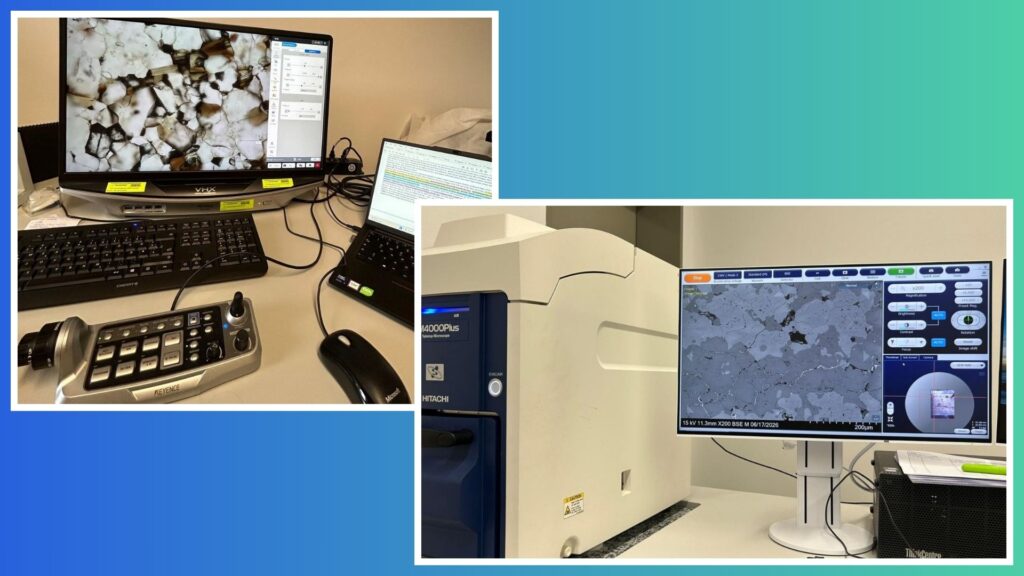
During June, Elisa has been working with a digital microscope and the SEM detector to identify microstructures in her thin section samples.
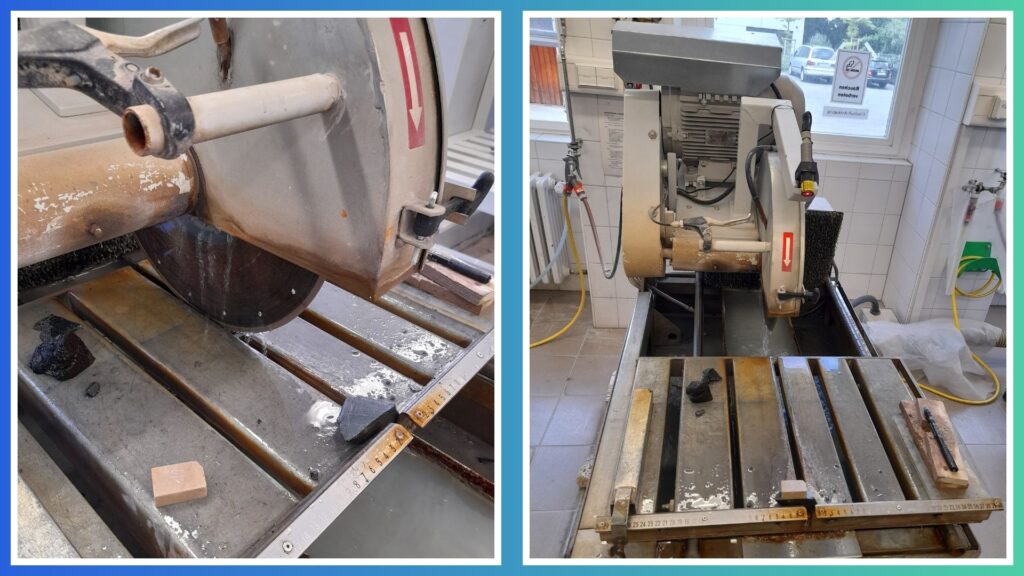
After collecting samples during their fieldwork in Scotland, June was sample preparation month for Lisa and Yessica. Before sending them to have thin sections made, they had to cut their rocks into chips pieces and be careful about their orientation to not cut the deformation.
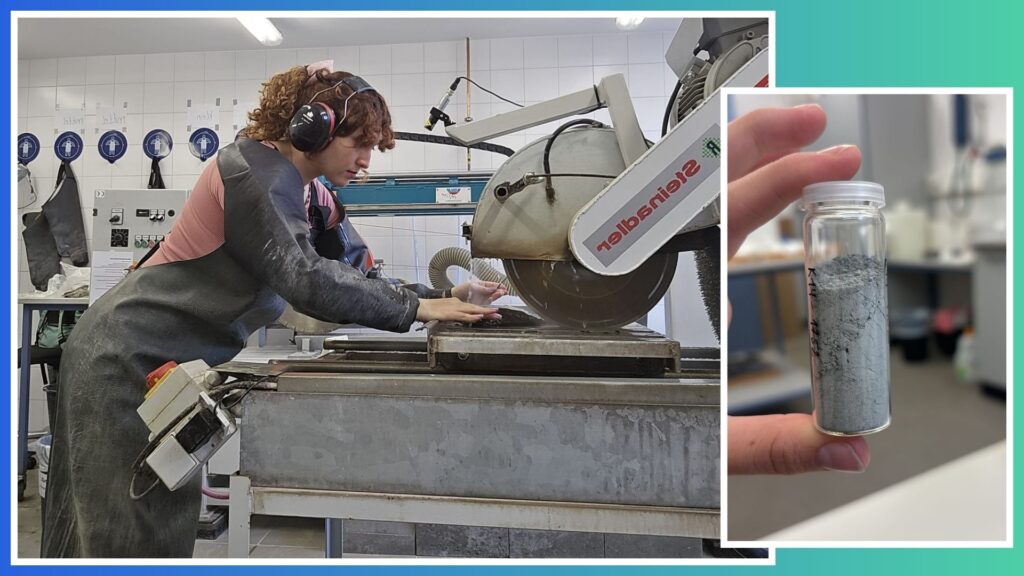
They also started to mill their samples in order to prepare for geochemical analysis, with the help of the research assistant and some students at FAU.
In late May 2026, Leo continued his exploration of the western side of the Upper Rhine Graben, between Neustadt An der Weistraße (Germany) and Mulhouse (France). He also started the exploration of the eastern side and found new outcrops holding barite mineralizations.
After a short break in the beginning of June, he picked up his first batch of thin sections at ThinSectionLab (Toul, France). At the same time, he dropped some more samples gathered during May field work. Ms Marjorie Didier, the Head of ThinSectionLab even let him use their saw to collect pieces for other analysis while the new batch was being prepared .
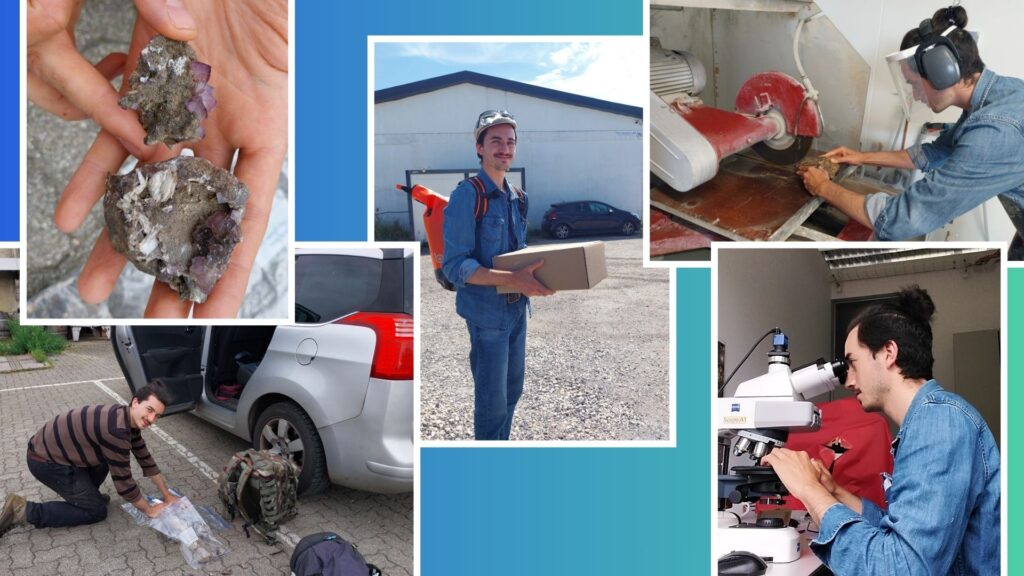
After that, Dr Simon Hector (Karlsruher Institute of Technology) was kind enough to let Leo borrow a microscope and the SEM for some first overview observations of his thin sections. The first sections will help him build an analytical procedure to determine fracture filling precipitation mechanisms.
Maxime and Ehsan are working on their codes and models, but find them hard to photograph!
Read more about ForMovFluid, and the different PhD projects elsewhere on the website!