
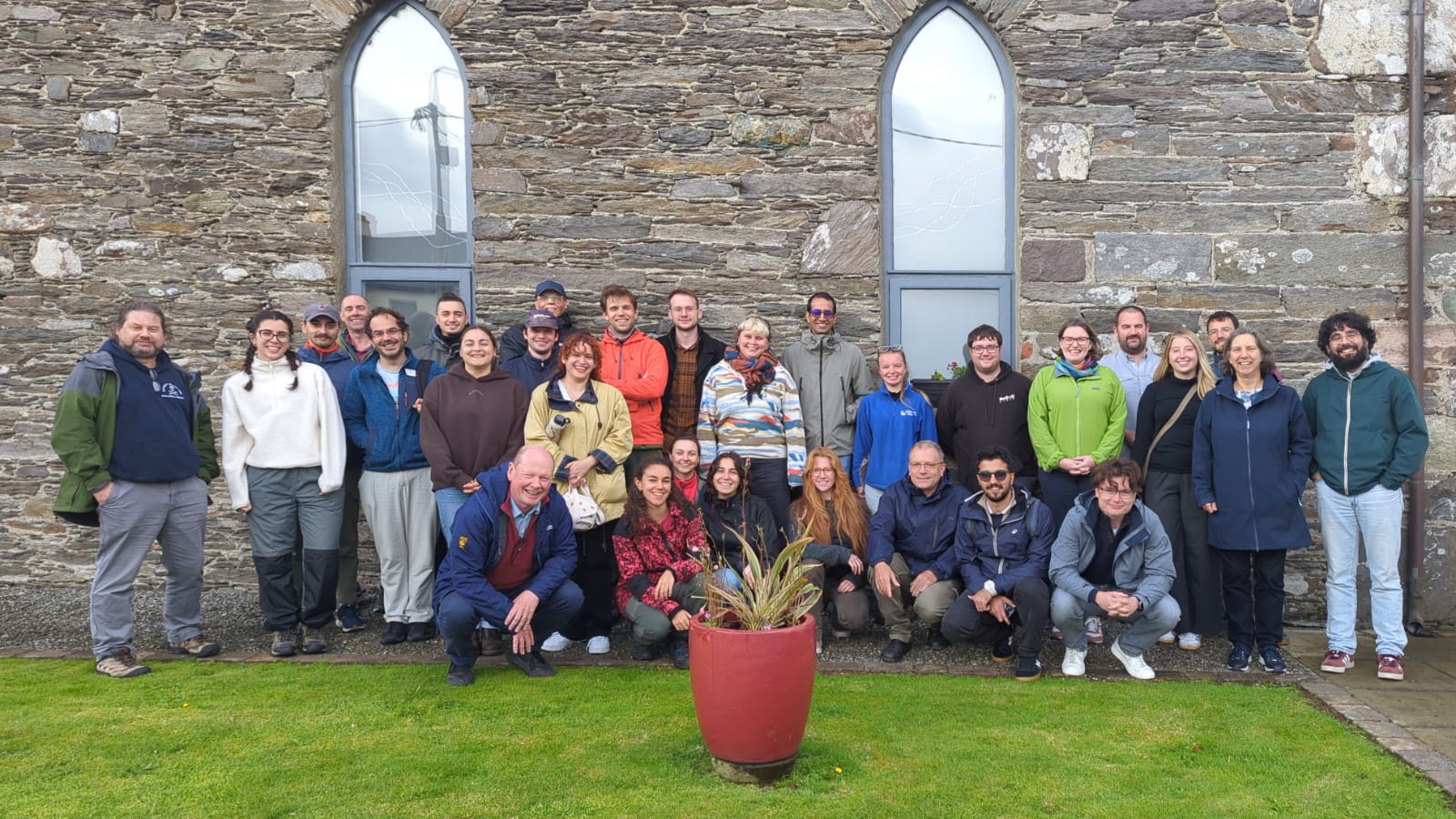
Last week, during some surprisingly sunny days for Ireland, the ForMovFluid consortium got together in Allihies, County Cork. It was the first in-person meeting for our 18 Doctoral Candidates, who endured five days full of fieldwork, transversal trainings, and—to be completely honest—some beers at the local pub. Here’s how the week went!
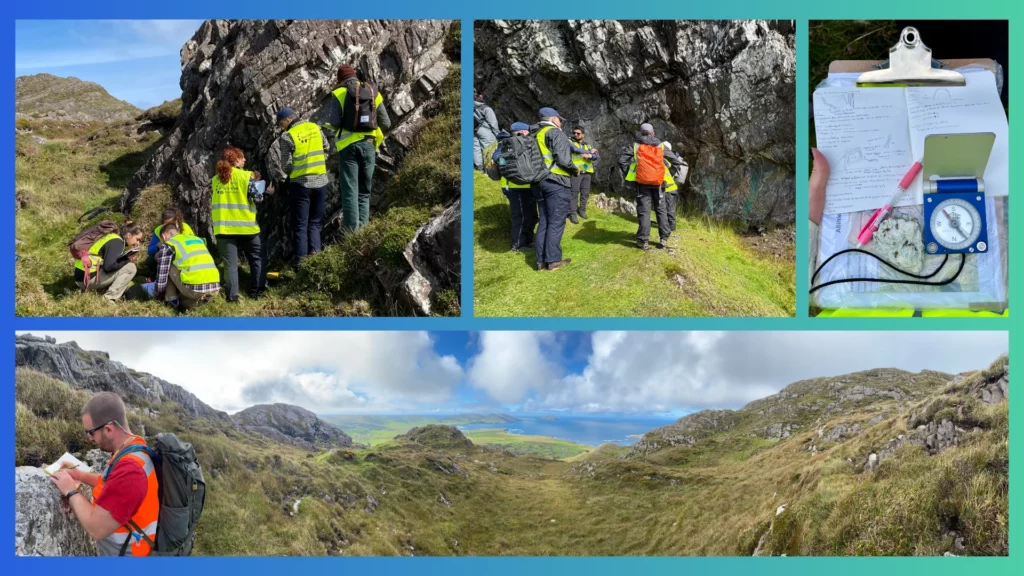
We started the week with some good old fieldwork, where the Doctoral Candidates were able to go back to basics: they worked in groups to scout the terrain, train their geologist eyes… and take notes for their presentations on Friday, when they presented their results.
On Tuesday evening, we talked about communication. A big part of a researcher’s life has to do with writing and designing posters. And yet, very few academics have received training on that. Well… not our Doctoral Candidates. Juanjo Sáenz de la Torre, from Agata Communications (our associate partner for communication and dissemination), led an evening session about the ForMovFluid communication strategy, and a workshop around graphic design and how to apply it to craft beautiful posters and presentations.
Wednesday was fully dedicated to a technical workshop on Hyperspectral Core Analysis, run by one of our partners: Russell Rogers from the Geological Survey of Ireland. A day full of coding and interesting discussions around this methodology, that captures high-resolution images across different spectral bands, and allows geologists to identify the mineral composition of a sample. And it does this without destroying the sample—which is always nice.
After a light night at the pub, on Thursday we went back into the classroom to tackle two topics: how to write a paper, and how to properly manage the data we produce in our research. The first bit was done again by our colleagues at Agata Communications. Pádraig Mac Aodhgáin, Research Data Steward at UCC, led the second workshop on Data Management. How to follow FAIR principles, archive and organise the data, Open Access initiatives… and much more. His session sparked intense and very necessary discussions around how we are going to handle the data we generate at ForMovFluid.
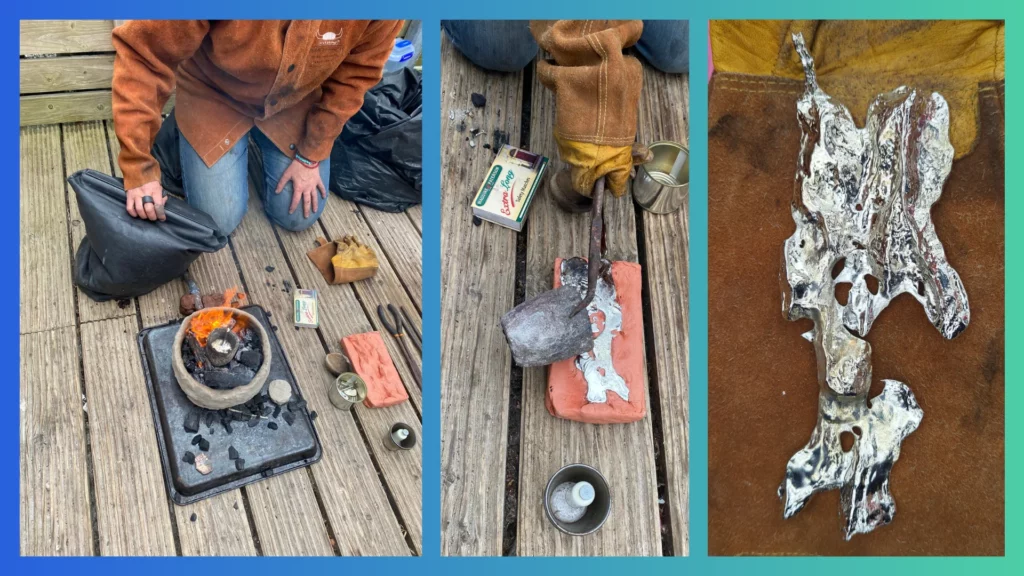
By Friday all of us were a little bit worn down, so we kept it light: the Doctoral Candidates presented their findings during the fieldwork on Monday and Tuesday, which gave them an opportunity to work on their public speaking skills. Then we had our Project Meeting, and the Doctoral Candidates held their first Doctoral Candidate Forum, a space to discuss on their own. We closed the day by exploring a mix of art and geology, thanks to Helle Helsner. She is a lecturer at MTU Crawford College of Art and Design, exploring ancient methods and materiality. She did a workshop on tin casting, showcasing ancient methods for casting this metal, and producing a beautiful piece as a result.
Not bad for a week’s work! Keep tuned to our social media (Bluesky, LinkedIn) to know more about the project, and hear more details about our Doctoral Candidates. After all, we’ve just started!