
ForMovFluid Supervisors
Barbara Kleine-Marshall
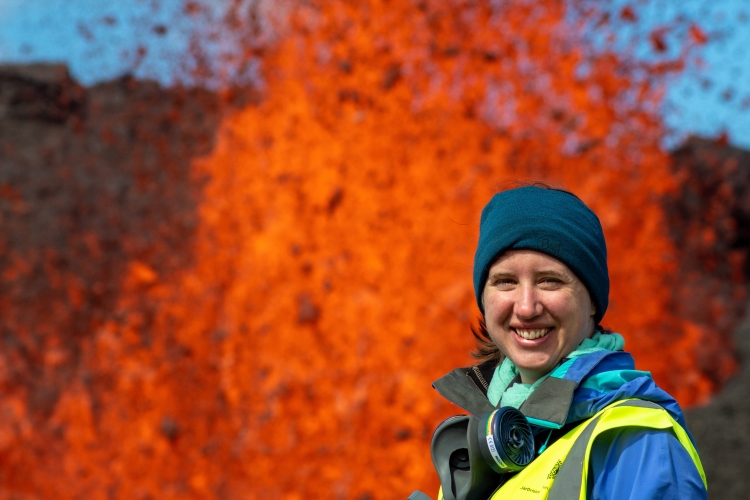
I am a geochemist fascinated by the world of fluids in the deep and shallow Earth’s crust. I started my geoscientist career at the Albrecht-Ludwigs University in Freiburg i. Br. Breisgau. From there I went to complete my masters and PhD at StockhoIm University. I spent several postdoc years at University of Iceland before returning to Germany in 2023.
Currently, I am particularly interested in studying the element cargo of crustal fluids to budget the release and entrapment of volatiles (e.g., S, CO2) and elements of economic and/or hazardous nature (e.g., Cu, As) from volcanic and hydrothermal systems associated with rift and subduction zones. Using field data in combination with thermodynamic reaction path modelling I try to assess the capacity of the Earth’s crust to permanently capture greenhouse gases and other hazardous elements and potentially recycling these components back into the mantle.
My research has led me to many interesting locations across Europe and beyond such as Scottish Highland, the Cyclades in Greece, Iceland, the Appalachian in the US and the East African rift in Kenya.
Friedrich-Alexander-Universität, Erlangen, Germany
Profile – Prof. Dr. Barbara Kleine-Marshall
On Bluesky – barbaraikm.bsky.social
William McCarthy
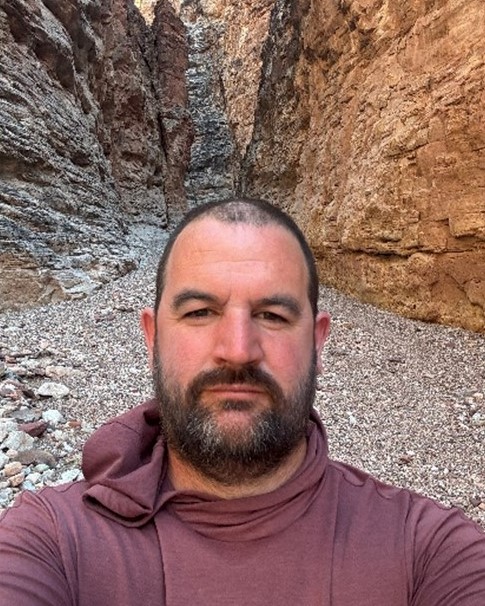
My work focuses on the internal architecture of igneous intrusions and the ore systems they host. I combine detailed field observations with quantitative rock physics to understand how magma moves through Earth’s crust, how deformation is recorded and how fluids mobilise within magma bodies to create critical metal deposits.
Our team at the M3Ore Lab at the University of St Andrews (Scotland) uses advanced rock magnetic techniques (including AMS, ARM, CPO, SPO and microstructural petrography) to reconstruct magma flow, compaction, and deformation in 3D. This work has helped resolve fundamental questions around magma transport (e.g. lateral flow in sills, magma fingers, and mush compaction), and demonstrated how transpressive tectonic regimes and intrusion dynamics interact to control the geometry and evolution of plutons and hydrothermal fluid flow regimes.
More recently, my research has focused on fluid–rock interaction within these systems, particularly how deformation and inherited magmatic fabrics localise fluid flow and ultimately control mineralisation. By integrating rock magnetics with hyperspectral (VNIR–SWIR) reflectance data, we can quantitatively map alteration mineralogy and identify fluid transport corridors within otherwise low-permeability crystalline rocks. This approach provides new insight into how progenitor magmatic and tectonic events create the permeability structure that governs later hydrothermal processes, linking deep crustal architecture directly to ore formation. The combination of rigorous structural analysis, petrophysics, and spectral tools allows us to build predictive models that are directly applicable to industry, thus improving targeting strategies, reducing uncertainty in exploration, and offering a scalable framework for understanding mineral systems in complex igneous terrains.
University of St Andrews, Scotland
School of Earth and Environmental Sciences – https://www.st-andrews.ac.uk/earth-sciences/
Linkedin – William McCarthy | LinkedIn
Pat Meere
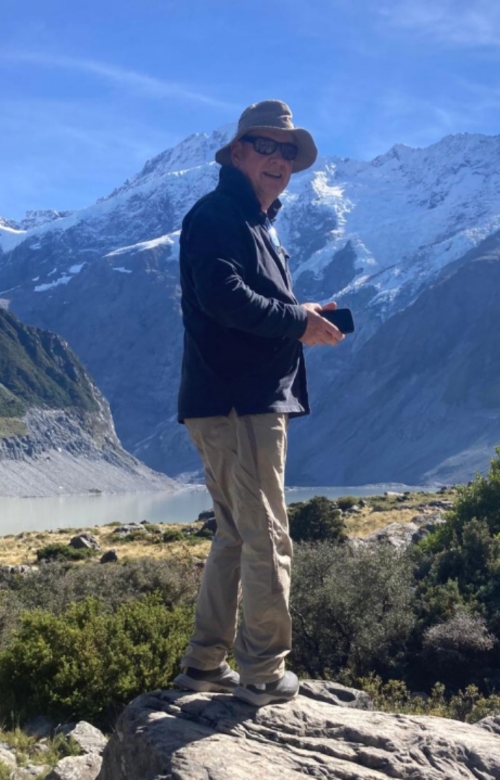
I am based in the School of Biological, Earth & Environmental Sciences (BEES) at University College Cork and my background is in structural geology. I have worked mainly on the Variscan geology of southern Ireland for most of my career. Deformation, on all scales, of the Earth’s crust is a direct consequence of large-scale plate-tectonic processes. My research adopts a multidisciplinary approach to studying the tectonic deformation of rocks. My early work focused on characterising the crustal scale geometry and regional strain patterns associated with the Irish Variscan orogen. In recent years my students and I worked on indirectly dating deformation using high level igneous intrusive rocks intimately associated with Variscan late-stage brittle deformation in Ireland. I also have an interest in the role of fluids in basin evolution and crustal deformation. Recent studies include an investigation of the role and nature of upper crustal fluids in vein-hosted copper mineralisation from the SW Ireland.
I also have a long running interest in all matters related to EDI and was Chair of our School’s Athena Swan committee for our last AS Bronze renewal here in the School of BEES.
University College Cork, Ireland
LinkedIn – Pat Meere | LinkedIn
Daniel Pastor-Galán
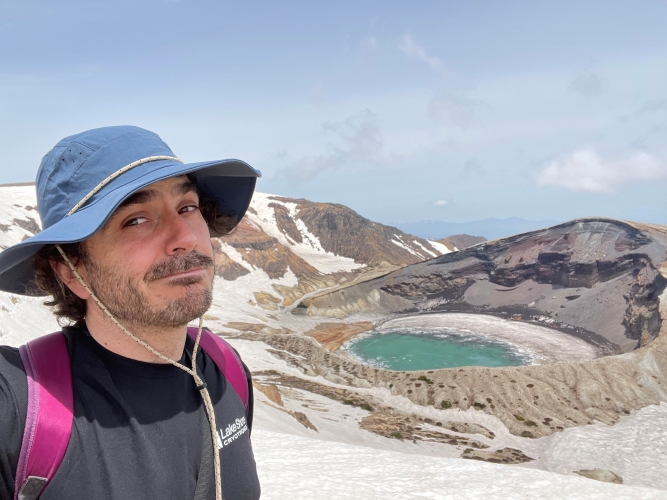
The Earth has an impressive habit of constantly writing and rewriting its history in rocks. My passion is to figure out how those chapters of our planet’s history were carved into the geological record, edited, torn apart, and scattered across the globe while riding on tectonic plates. My research focuses on plate tectonics, geodynamics, paleogeography, and Earth history, with a particular interest in how continents deform, how oceans open and close, and how parts of continents are sometimes removed and recycled back into the mantle. I combine field geology, paleomagnetism, geochemical and geophysical data to build plate‑tectonic models that reconstruct ancient tectonic systems. All in an effort to understand how the planet behaves, whether nicely… or not at all.
Outside the slow violence of plate tectonics, I am a trained clarinetist, playing classical and jazz. I also enjoy rock music and rock climbing, entirely coincidentally and not at all because I struggle to disengage from rocks. I am a long‑time fan of books, comics, and manga, and I maintain a healthy, research‑adjacent interest in coffee. Having lived and worked in Japan, it remains my happy place: where subduction zones, volcanoes, good coffee, great tea and an improbable sense of order coexist with minimal friction.
Institute for Geosciences (IGEO), CSIC, Madrid, Spain
Webpage: – www.danielpastorgalan.eu
Profile – Daniel Pastor Galán
LinkedIn – Daniel Pastor Galán | LinkedIn
Daniel Köhn
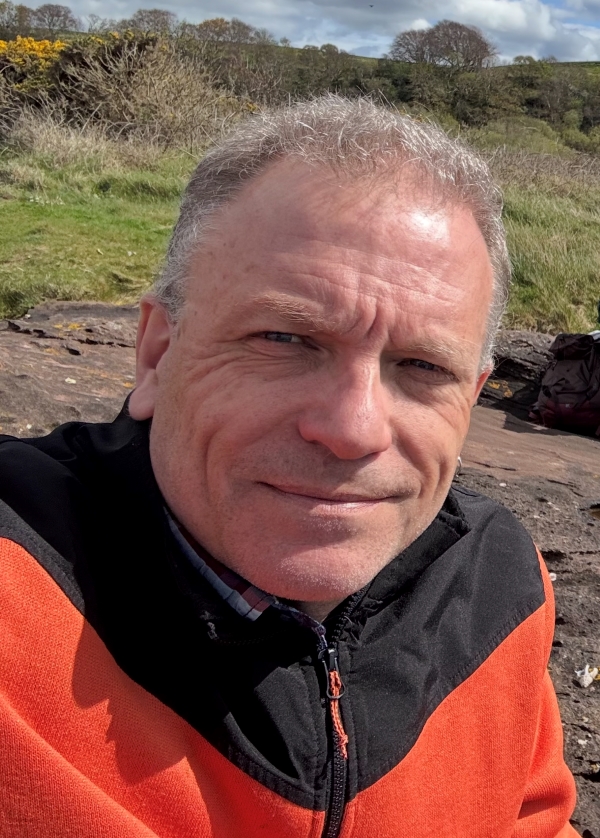
Daniel is a structural geologist based at the Friedrich Alexander University Erlangen Nuremberg at the Geozentrum in Erlangen. He is generally interested in tectonics and structure, specifically in fluid rock interaction and pattern formation in nature.
Daniel worked across all scales form thin sections all the way to plate tectonic scales. Field areas include the East African Rift System, the south Atlantic continental margins, fold and thrust belts in Italy, the Alps and subduction zones in Albania, Greece and Vanuatu.
Daniel works interdisciplinary across several fields, from geology to physics and social sciences, and he includes field techniques, numerical simulations as well as experiments in his work. His main interest lies in complete Earth System Science approaches to understand complex dynamic systems across all scales in space and time.
Applications of the research range from Geothermal industry to mineral resources all the way to global sustainable futures approaches.
Friedrich-Alexander-Universität, Erlangen, Germany
LinkedIn – Daniel Koehn | LinkedIn
Ana Negredo Moreno
Dr Ana Negredo is professor of Geophysics in the Complutense University of Madrid. She has a long research experience in the field of computational geodynamics, both in time-evolving models and in neotectonic models. During the last few years, she has increased the complexity and realism of the models, by including the full thermal and dynamic coupling also in 3D, time-dependent models (4D modelling). Dr. Negredo has gained much experience using ‘cutting-edge’ codes and she is familiar with the application of these codes to subduction, continental delamination and to lithosphere-plume interaction.
Regarding future developments of her research, she is strongly motivated to investigate mantle-derived fluids and their interaction with host rocks of. Within the framework of ForMovFluid, she is interested in addressing how tectonic settings such as subduction, collision, extension, and mantle plumes control the dynamics of mantle fluids.
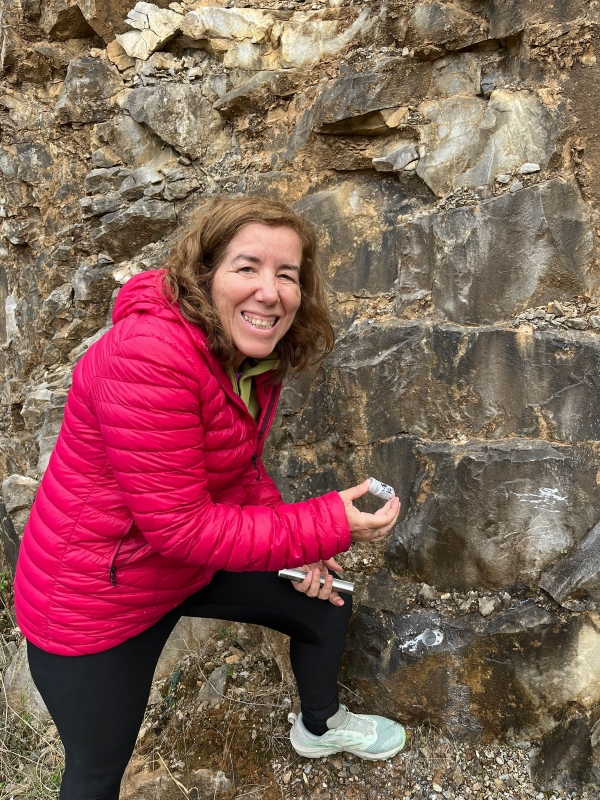
Univ. Complutense, Madrid, Spain
Richard Unitt
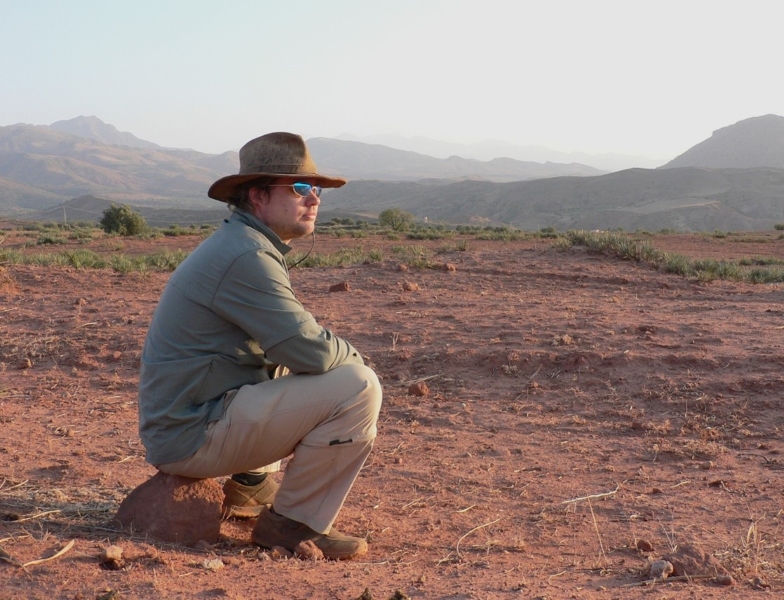
I have been studying and practising geology for over 40 years both as an academic and an industry professional. I specialise in mineralogy and petrography but have a broad multidisciplinary background including structural and metamorphic geology, engineering geophysics, base-metal deposits and Raman spectroscopy.
My current research concentrates on the examination of stone aggregates to understand how they provide friction on our road surfaces but also how they interact with other materials in asphalt.
I run the Raman spectroscopy facility in UCC which has allowed me to work with various scientists and individuals from many backgrounds, including work on fossil preservation, microplastics, pharmacology and archaeology.
I am also the current chairperson of the UNESCO designated Copper Coast Geopark in County Waterford – coppercoastgeopark.com
University College Cork, Ireland
Researchgate – Richard Unitt
Profile – Richard Unitt – Discover Research at University College Cork
LinkedIn – Richard Unitt | LinkedIn
Felix Allgaier
Deutsche ErdWärme, Germany
Paul Gordon
SLR, Kilkenny, Ireland